Street-level storefront exposed after closing
Dense DC retail corridors can leave broken glass highly visible and accessible. Temporary board-up helps control exposure before morning traffic returns.

Regional dispatch
24HR SERVICE
Washington DC emergency board-up
Urban board-up response for DC storefront density, restaurants, retail corridors, mixed-use properties, after-hours exposure, vandalism, forced-entry damage, and overnight securing.
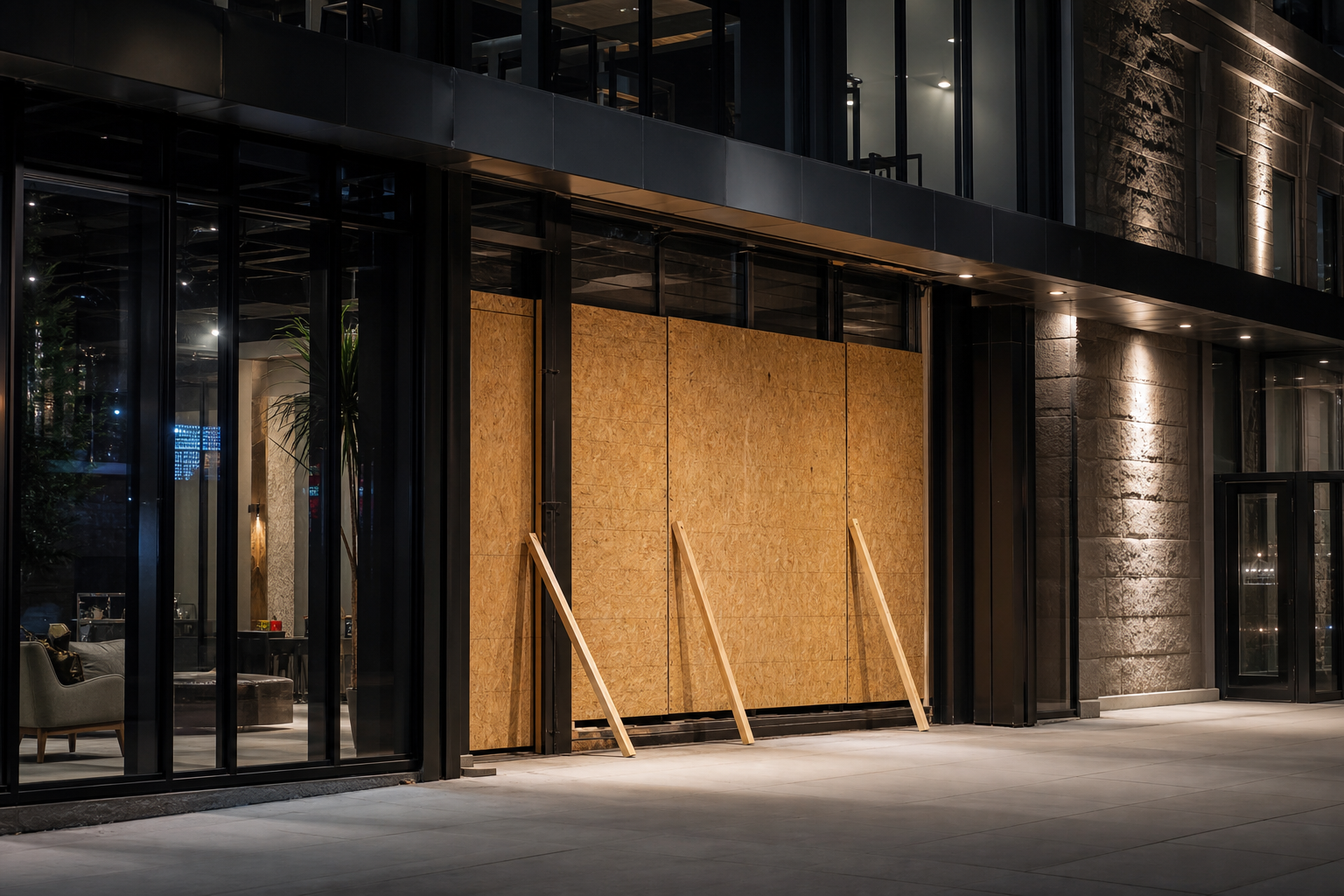
Dense-city securing
Temporary protection stabilizes exposed storefronts before repair coordination.
Urban operational positioning
This regional response page is built around dense urban emergency conditions, not generic regional copy or repeated location phrases.
Washington DC storefronts are often street-facing, close to pedestrian traffic, and connected to restaurants, offices, retail, mixed-use buildings, and government-adjacent commercial areas. After vandalism or forced entry, temporary board-up can reduce exposure while permanent glass or entrance repair is coordinated.
Regional dispatch
24HR SERVICE
Urban storefront scenarios
Dense-city relevance comes from storefront exposure, access conditions, business continuity, and repair sequencing.
Regional dispatch
24HR SERVICE
Dense DC retail corridors can leave broken glass highly visible and accessible. Temporary board-up helps control exposure before morning traffic returns.
A damaged entrance can affect staff access, deliveries, opening decisions, and customer safety in a busy urban setting.
Urban mixed-use buildings often combine residents, tenants, restaurants, and retail. Board-up helps stabilize the storefront while managers coordinate next steps.
Commercial entrances may need securing, documentation, and follow-up review of glass, frames, locks, closers, and panic hardware.
Sidewalk-facing storefront glass should be stabilized quickly to reduce weather exposure, unauthorized access, and additional disruption.
DC storefront systems may require measuring, safety glass matching, and repair scheduling after the exposed opening is protected.
Dense urban dispatch workflow
The workflow accounts for access, public-facing exposure, after-hours securing, documentation, and repair coordination.
Dispatch needs the DC address, access constraints, storefront or entrance type, visible damage, and whether management or insurance contacts are involved.
The response considers pedestrian exposure, storefront density, weather, public-facing glass, after-hours access, and immediate securing needs.
Temporary plywood protection stabilizes the storefront, restaurant entrance, or commercial opening while permanent repair is coordinated.
Photos and service notes can support property management, business ownership, insurance reporting, and repair planning.
Follow-up may involve storefront glass repair, emergency glass repair, glass door repair, or commercial entrance hardware support.
DC commercial context
DC board-up response should focus on dense storefront exposure, after-hours securing, business continuity, and entrance repair sequencing.
DC storefront exposure is often public-facing and highly visible. Board-up helps reduce access, weather intrusion, and additional disruption in busy commercial corridors.
After-hours damage can affect opening decisions, deliveries, staff access, cleanup, and customer safety. Temporary protection creates a controlled starting point.
Forced-entry damage can affect storefront frames, doors, locks, closers, and panic hardware. Securing comes first, then repair needs are identified.
Regional service relationships
DC emergency board-up should connect to the parent board-up service, break-in scenarios, storefront repair, emergency glass repair, door glass, and commercial entrance hardware support.
Primary emergency service
24/7 emergency board-up for break-ins, vandalism, shattered storefronts, weather exposure, and temporary securing.
Rapid glass repair for broken windows, doors, storefront panels, and exposed openings.
Storefront glass repair and replacement for retail, restaurant, office, and property management emergencies.
Commercial glass door repair for storefront entrances, shattered entry glass, aluminum door systems, and unsafe access points.
Scenario response page for forced-entry damage, exposed storefronts, documentation, board-up, and repair coordination.
Commercial storefront glass repair support for DC storefronts, restaurants, offices, and emergency board-up situations.
Washington DC emergency board-up page for storefront, restaurant, office, and forced-entry damage intent.
DC commercial coverage
Useful details include storefront exposure, access constraints, business continuity needs, tenant contacts, and repair sequencing.
Dispatch works best when the caller can explain the damaged opening, nearby access constraints, site contact, exposure level, and whether board-up is needed before glass repair.
Additional DC corridor coverage should support urban commercial context without duplicating this regional response page.
Restaurant and retail incident pages should connect to board-up first, then storefront repair after securing.
Neighborhood pages should be added only when they provide distinct commercial context and useful response details.
Emergency questions
Short answers for owners, managers, and operators dealing with an exposed opening right now.
Board-up is usually needed when broken storefront glass, vandalism, forced-entry damage, or a damaged entrance leaves the property exposed to access, weather, or additional damage.
DC storefronts are often dense, sidewalk-facing, and surrounded by restaurants, retail, offices, and mixed-use buildings. The response has to account for public exposure and after-hours access.
Yes. Temporary protection often comes first because storefront glass may require measurement, safety glass matching, fabrication, or frame review before permanent repair.
Damage photos and service notes can support insurance reporting, ownership updates, property management coordination, and repair planning.
Follow-up may involve commercial storefront glass repair, emergency glass repair, glass door repair, or commercial door closer and panic hardware support.
DC neighborhood and corridor coverage should stay selective, commercially specific, and connected to this regional response page without duplicating its core content.
Operational next steps
Secure exposed storefronts, doors, windows, and commercial openings before permanent repair.
Restore aluminum storefront systems, tempered glass panels, and commercial entrances.
Move from forced-entry damage to temporary protection, documentation, and repair coordination.
Coordinate glass repair after the property is stabilized and replacement needs are understood.
DC storefront exposure or commercial entrance damage
Secure a storefront, restaurant entrance, retail opening, mixed-use commercial space, or urban glass opening after vandalism, forced entry, weather exposure, or overnight damage.
Regional dispatch
24HR SERVICE