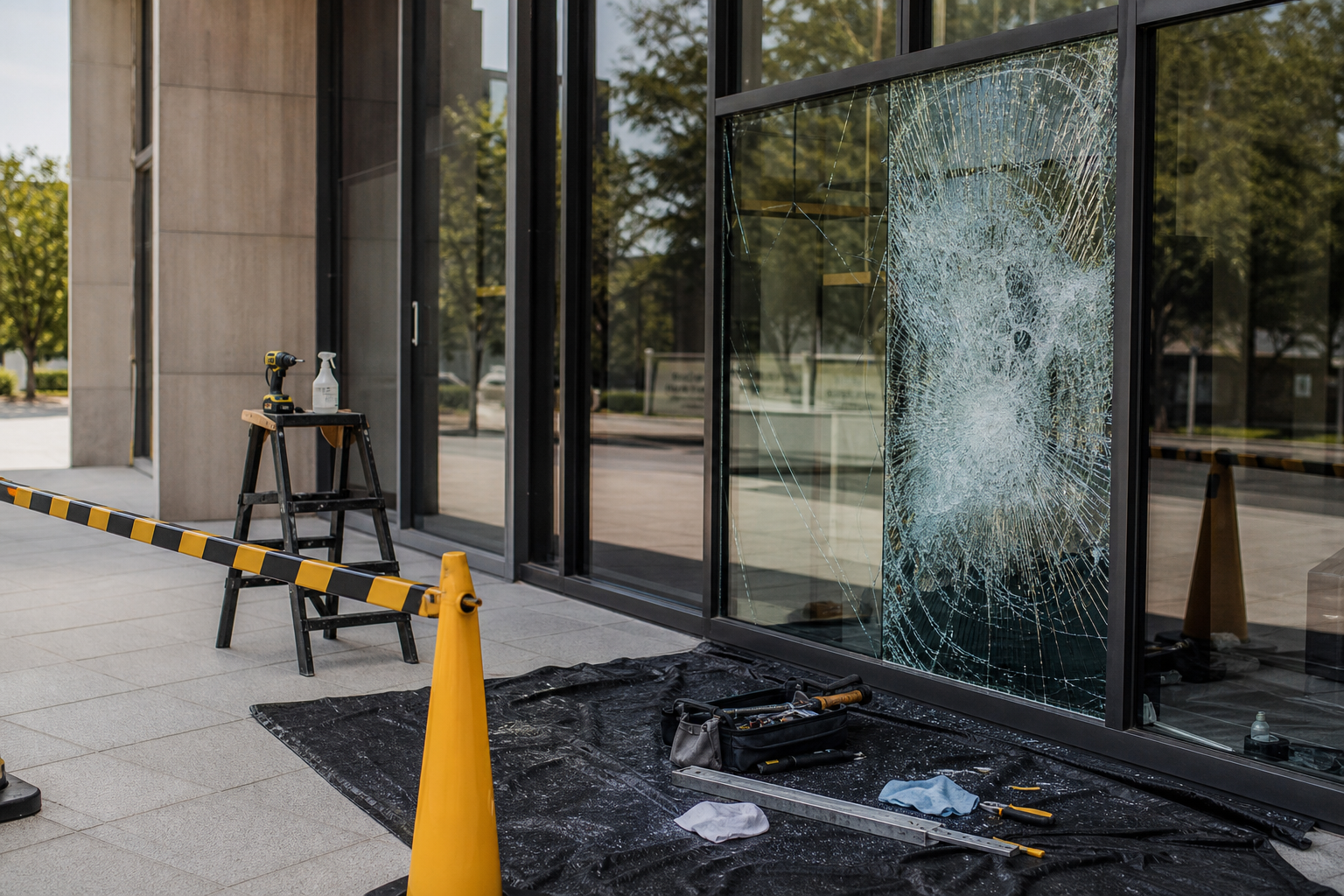
Exposed broken storefront glass
Commercial glass damage can leave a storefront open to access, weather, and safety concerns before permanent replacement is ready.

Regional dispatch
24HR SERVICE
Emergency glass repair
Repair coordination for storefront glass, door glass, shattered tempered glass, overnight emergencies, temporary protection, and business continuity after the opening is stabilized.
Stabilize first
Exposed broken glass may need temporary protection before permanent repair.
Repair response
Broken glass becomes an emergency when the property is exposed, unsafe, or vulnerable to weather and unauthorized access. The first step may be securing the opening before permanent repair.
Storefront glass, door glass, tempered panels, and commercial entrances often require measurement, material confirmation, or system review before final replacement. Temporary protection keeps the property controlled while repair details are coordinated.
Regional dispatch
24HR SERVICE
Emergency repair scenarios
Emergency glass repair should be evaluated by exposure, safety, glass type, storefront system, and business continuity needs.
Regional dispatch
24HR SERVICE
Commercial glass damage can leave a storefront open to access, weather, and safety concerns before permanent replacement is ready.
Entry door glass may need temporary securing first, then repair coordination that accounts for door operation and hardware condition.
Tempered safety glass often requires measurement, ordering, or fabrication before permanent replacement can be installed.
After-hours glass damage may need board-up or temporary protection before business operations resume the next morning.
Broken glass can allow rain, wind, debris, and unauthorized access into the property until the opening is stabilized.
Retail, restaurant, office, and managed properties need a repair path that supports cleanup, reopening, and documentation.
Semantic repair workflow
The repair workflow moves from exposure control to glass identification, documentation, and permanent repair coordination.
Dispatch needs the address, opening type, visible damage, access notes, and whether the property is currently exposed.
Loose glass, exposed storefronts, and broken door glass may require temporary protection or board-up before permanent repair.
The repair path depends on tempered glass, storefront panels, door glass, framing, dimensions, and whether hardware was damaged.
Photos and notes can support insurance, property management reporting, ownership updates, and repair planning.
After securing, the next step may be storefront glass replacement, door glass repair, or related entrance hardware support.
Temporary protection relationship
Emergency glass repair and emergency board-up work together when the opening must be stabilized before final replacement.
If the opening is exposed and the right glass is not immediately available, board-up protects the property before repair is completed.
Storefront panels, door glass, and tempered glass may require measurement and material confirmation. Securing the opening gives time to do that correctly.
The goal is not to delay repair. It is to reduce risk first, then move into the right permanent glass or entrance solution.
Commercial property focus
Repair coordination should account for storefront exposure, door glass, tenant access, customer safety, and property management needs.
Public-facing broken glass affects merchandise exposure, customer access, cleanup, and reopening decisions.
Entry glass, sidelites, dining-area windows, and storefront panels can affect staff and customer flow.
Ground-floor commercial glass and entrances require access coordination, documentation, and a clear repair handoff.
Internal repair path
This page connects temporary securing, commercial storefront repair, break-in response, regional response pages, door-glass work, and hardware support.
Future door-glass, hardware, and regional glass pages should link here when the intent is emergency glass stabilization or repair coordination after securing.
24/7 emergency board-up for Northern Virginia break-ins, vandalism, storefront damage, weather exposure, and temporary securing.
Emergency board-up response for Maryland businesses and homes after break-ins, vandalism, shattered glass, and exposed openings.
Scenario response page for forced-entry damage, exposed storefronts, emergency board-up, documentation, and repair coordination.
Emergency questions
Short answers for owners, managers, and operators dealing with broken glass, exposed openings, temporary protection, and repair coordination.
Sometimes, but not always. Storefront glass, door glass, and tempered glass may require measurement, material confirmation, or fabrication before permanent replacement.
Board-up is often needed when the opening is exposed, unsafe, or vulnerable to weather and unauthorized access before permanent glass can be installed.
Yes. Commercial storefronts, restaurants, offices, and managed properties are core emergency glass situations, especially after break-ins, vandalism, and after-hours damage.
Door glass may be part of the repair path. Forced-entry damage can also involve closers, panic hardware, locks, rails, or frames.
Damage photos and service notes can support property management reporting, ownership updates, insurance coordination, and repair planning.
Provide the address, opening type, glass or door condition, access instructions, and whether the property is exposed or already secured.
Operational next steps
Secure exposed storefronts, doors, windows, and commercial openings before permanent repair.
Restore aluminum storefront systems, tempered glass panels, and commercial entrances.
Move from forced-entry damage to temporary protection, documentation, and repair coordination.
Coordinate glass repair after the property is stabilized and replacement needs are understood.
Broken glass or exposed commercial opening
Coordinate temporary protection, storefront glass repair, door glass repair, documentation, and permanent repair after broken glass or overnight exposure.
Regional dispatch
24HR SERVICE