Storefront glass broken after a break-in
A street-facing opening can leave merchandise, fixtures, and the interior exposed. Board-up protects the opening before permanent storefront glass is measured or replaced.

Regional dispatch
24HR SERVICE
24/7 emergency board-up service
Temporary property securing for break-ins, vandalism, shattered storefronts, overnight exposure, and commercial entrances that need protection before permanent glass replacement.
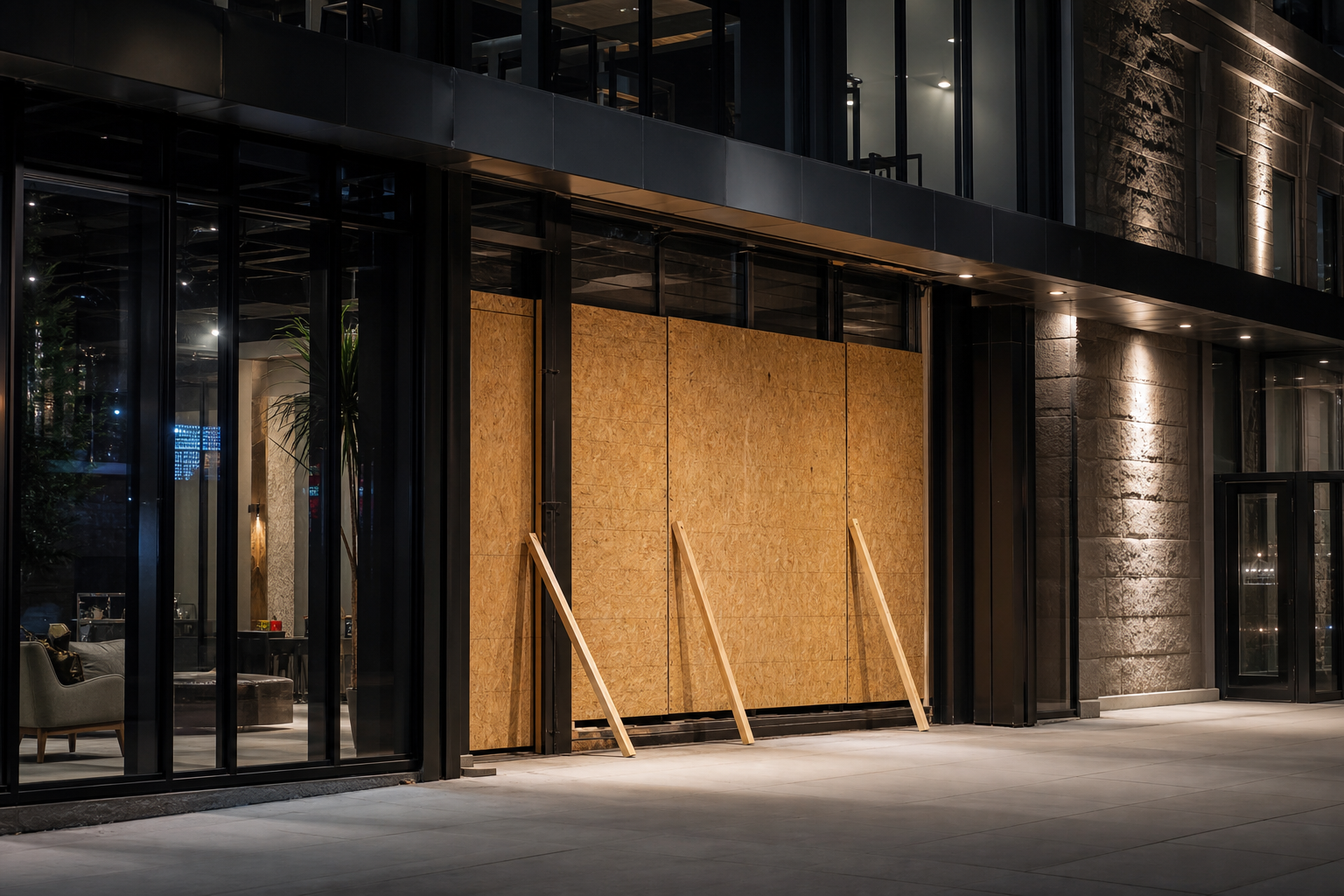
Temporary protection now
Board-up stabilizes the property while glass, storefront, or entrance repairs are planned.
Property securing first
Emergency board-up is the practical first move when the building is exposed. It protects the opening, reduces immediate risk, and creates time for the correct permanent repair.
Storefront glass, door glass, tempered panels, and commercial entrance systems are not always ready for same-visit replacement. Temporary plywood securing keeps the property controlled while the opening is measured, the glass type is confirmed, and the repair path is scheduled.
Regional dispatch
24HR SERVICE
Commercial emergency scenarios
Board-up work is driven by the condition of the property: what is open, who can access it, what weather can enter, and what has to happen before permanent repair.
Regional dispatch
24HR SERVICE
A street-facing opening can leave merchandise, fixtures, and the interior exposed. Board-up protects the opening before permanent storefront glass is measured or replaced.
After-hours damage needs a controlled response: secure the opening, document the condition, and reduce exposure before staff or customers return.
Door glass, sidelites, and front windows can create access and safety issues. Temporary securing keeps the business from sitting exposed overnight.
Property managers need the opening stabilized quickly, with clear documentation for ownership, insurance, and follow-up repair planning.
Rain, wind, and debris can turn glass damage into interior property damage. Board-up helps limit that risk while repair work is scheduled.
Broken glass may be only one part of the issue. The response may also identify door, frame, closer, or panic hardware concerns after the site is secure.
Dispatch sequence
The response should create order quickly: confirm the damage, secure the opening, document the condition, and define the repair path.
Dispatch needs the property address, exposed opening type, approximate size, access instructions, and whether police or insurance documentation is involved.
The response considers storefront framing, door glass, loose glass, weather exposure, public access, and whether temporary plywood securing is the right first step.
The exposed opening is secured to reduce unauthorized access, weather intrusion, and overnight risk until permanent repair can be completed.
Damage photos and service details can support property management reporting, insurance claims, and the repair handoff.
After the property is stable, the next step may be emergency glass repair, storefront glass replacement, glass door repair, or commercial hardware work.
Repair sequencing
The point of emergency board-up is not to delay glass repair. It keeps the property protected while the right repair is confirmed.
Storefront panels, tempered glass, laminated glass, and entry systems often require measurement, material confirmation, and fabrication before replacement.
An exposed opening creates access, weather, and safety concerns now. Board-up addresses the immediate risk while the permanent repair path is organized.
Retail, restaurants, and managed buildings need a clean emergency handoff so staff, owners, and insurers know what has been secured and what remains next.
Commercial stabilization
A secured opening gives owners and managers a controlled situation to work from after an emergency.
A secured opening lowers the risk of additional entry, weather intrusion, and interior damage while the business is closed.
Temporary protection can help owners and managers decide whether the property can be accessed safely before permanent glass work is complete.
Photos and service notes help connect the emergency board-up with insurance reporting, property management updates, and repair scheduling.
Supporting service relationships
Once the property is protected, related glass, storefront, door, and hardware services can move the site from temporary protection to permanent repair.
Primary emergency service
Rapid glass repair for broken windows, doors, storefront panels, and exposed openings.
Internal service path
This page should become the main response page for temporary protection. Related pages support the repair work that often follows after the opening is secured.
Future break-in, vandalism, storefront damage, and regional pages should link back here when the search intent is exposed-opening protection or temporary property securing.
Rapid glass repair for broken windows, doors, storefront panels, and exposed openings.
Storefront glass repair and replacement for retail, restaurant, office, and property management emergencies.
Commercial glass door repair for storefront entrances, shattered entry glass, aluminum door systems, and unsafe access points.
24/7 emergency board-up for Northern Virginia break-ins, vandalism, storefront damage, weather exposure, and temporary securing.
Emergency board-up response for Maryland businesses and homes after break-ins, vandalism, shattered glass, and exposed openings.
Emergency questions
Short answers for owners, managers, and operators dealing with an exposed opening right now.
Board-up is usually the first step when an opening is exposed, unsafe, or vulnerable to weather and unauthorized access. Permanent glass replacement may require measuring, ordering, or confirming the storefront system.
Yes. Storefront board-up after break-ins, vandalism, forced entry, and shattered commercial glass is a primary emergency use case.
Temporary plywood securing can reduce rain, wind, debris, and overnight exposure while the permanent repair is coordinated.
Damage photos and service details can be documented during the emergency response to support reporting, claims, and repair planning.
Emergency glass repair, storefront glass replacement, glass door repair, and related entrance work can be coordinated after the opening is secured.
Provide the address, access instructions, opening type, approximate size, damage cause if known, and whether police or insurance documentation is involved.
Operational next steps
Secure exposed storefronts, doors, windows, and commercial openings before permanent repair.
Restore aluminum storefront systems, tempered glass panels, and commercial entrances.
Move from forced-entry damage to temporary protection, documentation, and repair coordination.
Coordinate glass repair after the property is stabilized and replacement needs are understood.
Exposed opening or overnight property risk
Secure a storefront, commercial entrance, window, vacant unit, or damaged opening after a break-in, vandalism, weather exposure, or glass failure.
Regional dispatch
24HR SERVICE