Storefront door glass shattered after forced entry
Broken entrance glass can leave a business exposed while also affecting locks, rails, closers, panic hardware, and safe door operation.

Regional dispatch
24HR SERVICE
Commercial glass door repair
Repair coordination for shattered entrance glass, storefront door glass, aluminum commercial door systems, temporary securing, and related closer or panic hardware concerns after damage.
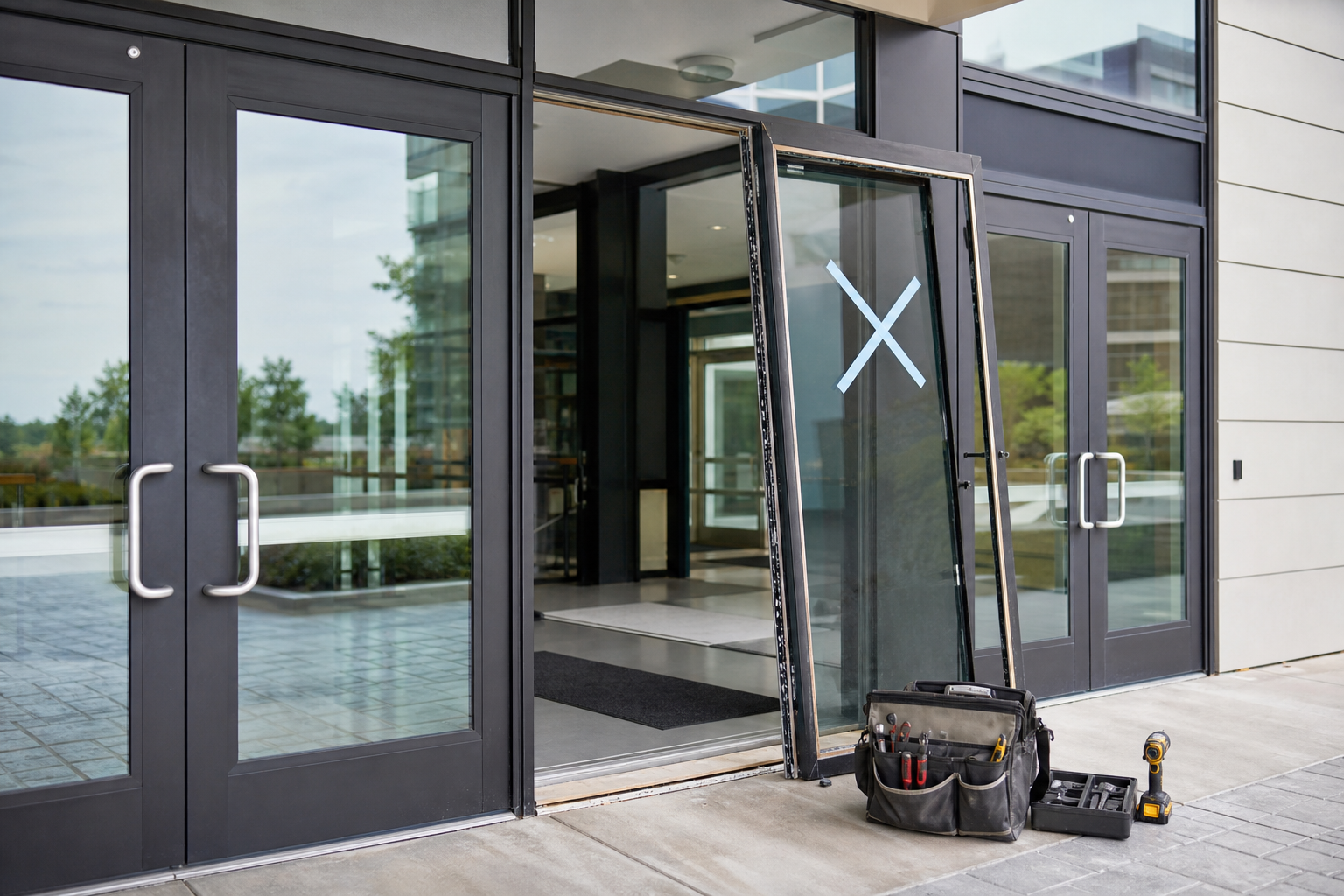
Entrance safety first
Commercial door glass may need temporary securing before replacement.
Commercial entrance strategy
Storefront door glass is part of a commercial entrance system. Repair coordination should consider glass, rails, frames, locks, closers, panic hardware, access, and whether the property is exposed.
A broken commercial glass door affects more than appearance. It can change access control, business continuity, staff safety, public-facing exposure, and whether the door operates correctly after the glass is replaced.
Regional dispatch
24HR SERVICE
Entrance-system scenarios
The repair path depends on whether the entrance is exposed, whether the door operates safely, and whether nearby hardware was damaged.
Regional dispatch
24HR SERVICE
Broken entrance glass can leave a business exposed while also affecting locks, rails, closers, panic hardware, and safe door operation.
Entry glass damage can affect staff access, customer safety, cleanup timing, deliveries, and opening decisions the next morning.
Commercial door glass sits inside rails, stiles, frames, and surrounding storefront components. Repair decisions depend on the whole entrance system.
If replacement glass cannot be completed immediately, board-up or temporary protection can stabilize the opening before permanent door glass repair.
Forced-entry events may affect more than glass. Closers, panic devices, locks, pivots, rails, and alignment may need follow-up review.
Commercial entrances need a repair path that protects the property while supporting staff access, tenant communication, and reopening plans.
Entrance repair workflow
The workflow moves from emergency stabilization to entrance-system assessment, documentation, and permanent repair coordination.
Dispatch needs the address, entrance type, access instructions, visible glass damage, and whether the door still operates safely.
Loose glass, exposed openings, and unsecured entrances may require temporary protection or board-up before permanent repair.
The repair path depends on glass size, rails, stops, aluminum framing, locks, closers, panic hardware, and door alignment.
Photos and service notes help owners, managers, tenants, and insurance contacts understand what was secured and what remains to repair.
After stabilization, follow-up may involve door glass replacement, storefront glass repair, or commercial door hardware support.
Entrance-system repair
The strongest repair path explains the whole commercial entrance system instead of treating door glass as a standalone pane.
Commercial entry glass interacts with rails, stiles, stops, lock hardware, closers, hinges or pivots, and the surrounding storefront frame.
Some door glass requires measurement, safety glass matching, or system review. Temporary securing protects the opening while that repair path is coordinated.
If a closer, panic bar, lock, rail, or frame is damaged, replacing the glass alone may not restore safe entrance operation.
Business continuity
Repair coordination should protect the opening, support safe access, and connect emergency response with permanent entrance repair.
A damaged commercial entry can leave a business open to weather, unauthorized access, and sidewalk-facing safety concerns.
Repair coordination should account for who needs to enter, when cleanup can happen, and how the property will be secured overnight.
Stabilization, documentation, and entrance-system notes help connect emergency response with permanent glass or hardware work.
Hardware relationship
Commercial door closer and panic bar support matters when forced entry affects safe operation, but this page stays focused on entrance glass and stabilization.
Forced-entry damage can affect glass and hardware at the same time. After the opening is stabilized, follow-up may include closers, panic devices, locks, pivots, rails, frames, or alignment.
Door closers and panic bars matter when entrance operation, egress hardware, or forced-entry damage affects whether the commercial door is safe after the glass is secured.
Break-in response contextEmergency questions
Short answers for owners, managers, and operators dealing with shattered commercial entrance glass, unsafe entries, temporary securing, and repair coordination.
Yes. This page is focused on commercial entrance glass, storefront door glass, aluminum storefront door systems, and unsafe commercial entries.
Sometimes, but not always. Commercial door glass may require measurement, safety glass matching, or review of the entrance system before permanent replacement.
Board-up or temporary protection is often needed when the entry is exposed, unsafe, or cannot be permanently repaired immediately.
Forced-entry damage can affect closers, panic hardware, locks, rails, pivots, frames, or alignment. Those issues may need follow-up after the opening is stabilized.
Yes. Storefront door glass is often part of an aluminum entrance system, so repair coordination should consider glass, frame fit, rails, stops, and operation.
Have the address, access notes, door type, visible glass or hardware damage, and whether the entrance is exposed or already secured.
Operational next steps
Secure exposed storefronts, doors, windows, and commercial openings before permanent repair.
Restore aluminum storefront systems, tempered glass panels, and commercial entrances.
Move from forced-entry damage to temporary protection, documentation, and repair coordination.
Coordinate glass repair after the property is stabilized and replacement needs are understood.
Shattered entrance glass or unsafe commercial entry
Coordinate emergency securing, door glass replacement, storefront entrance review, documentation, and related hardware follow-up for commercial properties.
Regional dispatch
24HR SERVICE