Retail storefront forced open overnight
Broken front glass and forced-entry damage can leave merchandise, fixtures, and the sales floor exposed until the opening is secured.

Regional dispatch
24HR SERVICE
Storefront break-in response
Emergency response for forced-entry damage, shattered storefront glass, exposed openings, temporary plywood protection, documentation, and storefront repair after the property is secured.
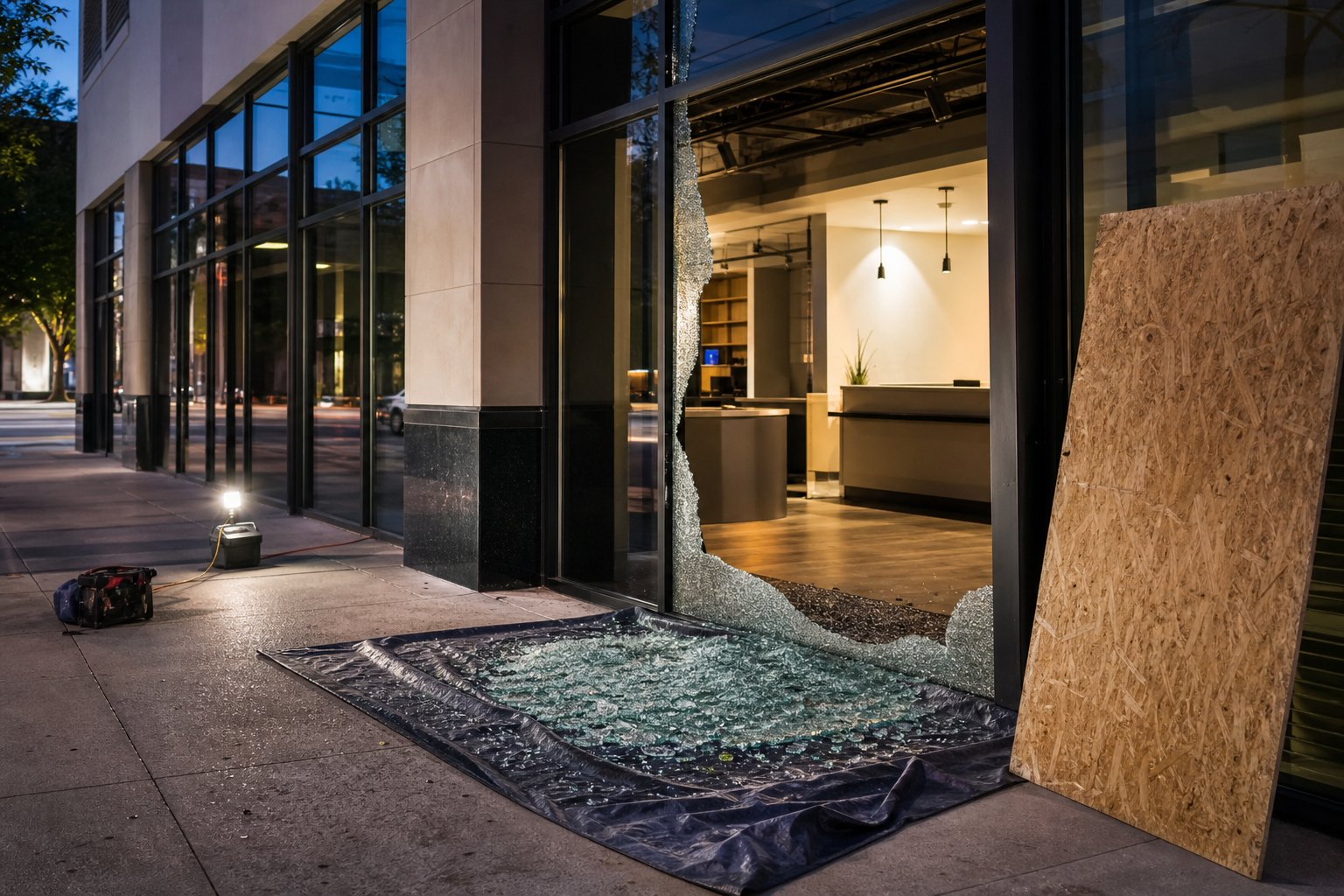
Secure first, repair second
Break-ins create exposed-opening risk before they become a normal glass repair job.
Operational response
A commercial break-in creates two connected problems: the property is exposed now, and the storefront system needs permanent repair after the emergency is stabilized.
The first response is usually temporary protection: secure the opening, reduce weather exposure, document the damage, and make the property safer for owners, managers, staff, and repair crews. Storefront glass repair follows after the opening, framing, door glass, and entrance hardware are assessed.
Regional dispatch
24HR SERVICE
Commercial break-in scenarios
Scenario pages should describe real operational conditions: what is exposed, what has to be secured, and what repair path follows.
Regional dispatch
24HR SERVICE
Broken front glass and forced-entry damage can leave merchandise, fixtures, and the sales floor exposed until the opening is secured.
Door glass, sidelites, and adjacent storefront panels can affect staff access, opening decisions, and customer safety after a break-in.
Property managers need a fast stabilization path, clear access coordination, damage photos, and repair notes for ownership and insurance.
A damaged storefront may need the same response path as a break-in: board-up first, then glass and entrance repair coordination.
Forced entry can affect more than the glass. Closers, panic bars, locks, door rails, and frames may need review after securing.
Rain, wind, and debris can turn a broken storefront into interior property damage if the opening is not protected quickly.
Emergency workflow
The workflow should reduce confusion: confirm the damage, secure the opening, document the condition, assess the system, and coordinate permanent repair.
Dispatch needs the address, access instructions, opening type, visible damage, and whether police or insurance documentation is involved.
Emergency board-up or temporary protection reduces overnight exposure, weather intrusion, and additional unauthorized access.
Photos and service notes help connect the emergency response with insurance reporting, property management updates, and repair planning.
Commercial entrances may involve glass panels, aluminum framing, door glass, closers, panic hardware, locks, and frame alignment.
After the opening is stable, storefront glass repair, emergency glass replacement, door glass, or hardware work can be scheduled.
Commercial stabilization
Break-ins create immediate property risk. Temporary protection stabilizes the situation before storefront repair is finalized.
The exposed opening is the immediate risk. Board-up creates a controlled situation before glass type, frame condition, and replacement timing are finalized.
A stabilized storefront helps owners and managers evaluate whether staff can enter, cleanup can begin, and reopening plans can move forward.
Damage photos and response notes give property managers, insurance contacts, and repair teams a clearer record of what happened.
Repair coordination
Once the opening is protected, repair coordination can focus on glass type, storefront system condition, entrance operation, and business continuity.
Tempered or safety glass often needs accurate measurement and system matching before permanent replacement can be installed.
Door closers, panic bars, locks, rails, and frames can be affected by forced entry and may need review alongside glass repair.
Retail and restaurant repairs should account for business hours, staff access, cleanup, customer safety, and property management requirements.
Related service bridge
This scenario page should route users to the right service based on the next operational step.
Future vandalism, vehicle-impact, and regional storefront incident pages can link here when the intent is incident response, then branch to board-up for securing or storefront repair for permanent restoration.
24/7 emergency board-up for break-ins, vandalism, shattered storefronts, weather exposure, and temporary securing.
Rapid glass repair for broken windows, doors, storefront panels, and exposed openings.
Storefront glass repair and replacement for retail, restaurant, office, and property management emergencies.
Commercial glass door repair for storefront entrances, shattered entry glass, aluminum door systems, and unsafe access points.
24/7 emergency board-up for Northern Virginia break-ins, vandalism, storefront damage, weather exposure, and temporary securing.
Emergency board-up response for Maryland businesses and homes after break-ins, vandalism, shattered glass, and exposed openings.
Emergency questions
Short answers for owners, managers, and operators dealing with an exposed opening right now.
The exposed opening should be secured first. Board-up or temporary protection reduces additional access, weather exposure, and further property damage while permanent repair is coordinated.
Sometimes, but many storefront repairs require measurement, glass type confirmation, fabrication, or frame review. Board-up is often the immediate first step.
Yes. Forced entry can affect door glass, aluminum framing, closers, panic bars, locks, rails, and alignment. Those issues should be assessed after the property is secure.
Often, yes. Overnight securing helps reduce exposure before staff return and gives owners time to plan cleanup, documentation, and repair coordination.
Damage photos and service notes can support insurance reporting, property management records, and the repair handoff after the emergency response.
Provide the property address, access instructions, visible glass or entrance damage, approximate opening size, and whether police or insurance documentation is involved.
Operational next steps
Secure exposed storefronts, doors, windows, and commercial openings before permanent repair.
Restore aluminum storefront systems, tempered glass panels, and commercial entrances.
Move from forced-entry damage to temporary protection, documentation, and repair coordination.
Coordinate glass repair after the property is stabilized and replacement needs are understood.
Forced-entry or exposed storefront damage
Secure the exposed opening, document damage, and coordinate storefront glass, entrance, or hardware repair after a commercial break-in.
Regional dispatch
24HR SERVICE