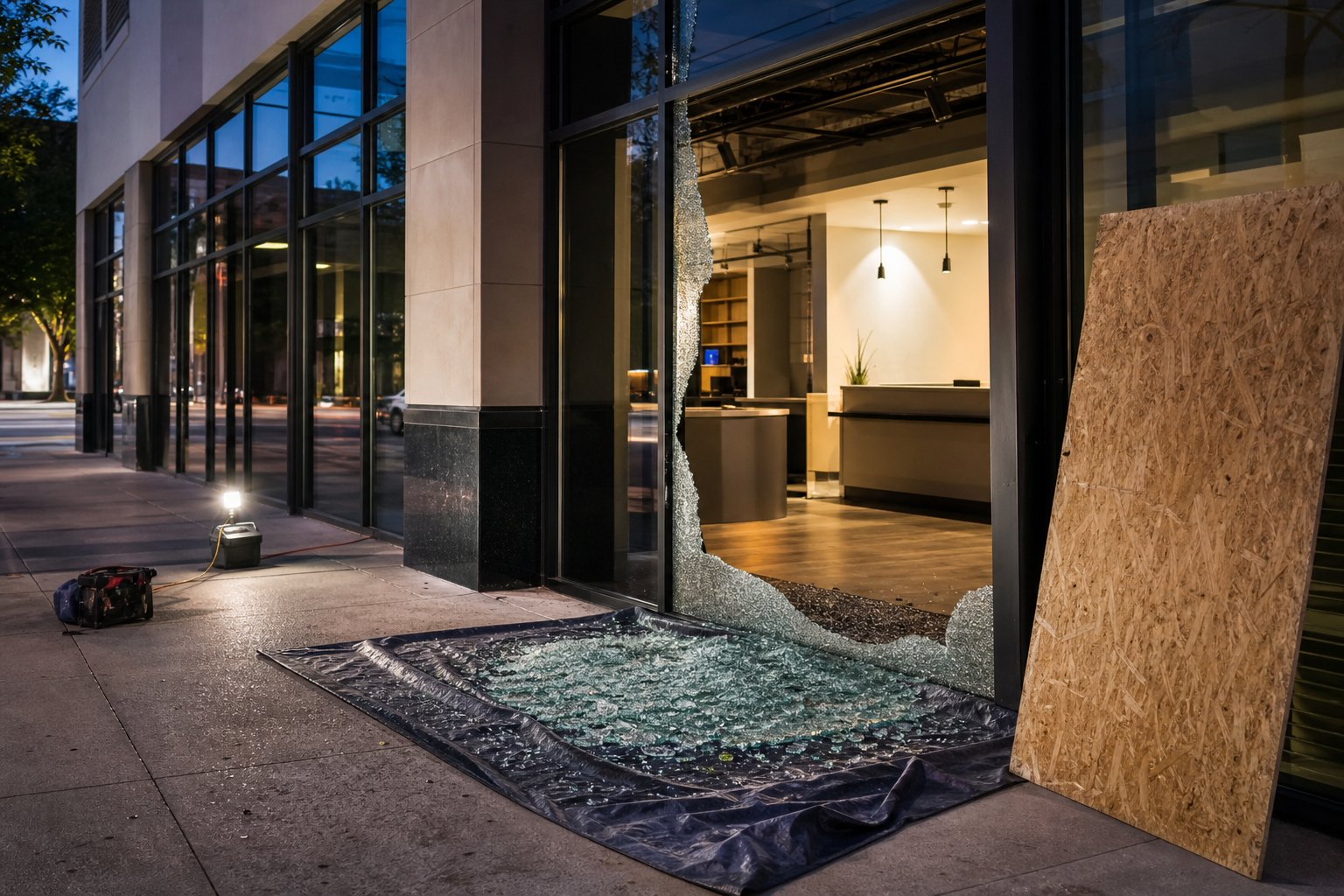
Forced-entry storefront damage
Break-ins can leave glass, doors, frames, locks, closers, and merchandise areas exposed. The incident path starts with securing the opening and documenting the condition.

Regional dispatch
24HR SERVICE
Commercial emergency scenarios
Incident-based navigation for storefront break-ins, vandalism, exposed openings, shattered entrance glass, overnight securing, unsafe commercial entries, and stabilization before permanent repair.
Incident-specific response
Break-ins, vandalism, and unsafe glass require securing, documentation, and repair coordination.
Incident categories
Incident details help callers identify what is exposed, what must be stabilized, and whether the job needs board-up, glass repair, storefront repair, regional coordination, or dispatch.
A break-in, vandalism event, or unsafe entrance is not just a repair topic. It is an emergency sequence: identify exposure, secure the opening, document conditions, then coordinate repair.
Scenario response page for forced-entry damage, exposed storefront glass, emergency board-up, documentation, and storefront repair sequencing.
Primary service page for exposed openings, overnight securing, temporary protection, vandalism, and commercial board-up response.
Repair coordination path for broken glass conditions after unsafe openings are stabilized or when glass repair can proceed directly.
Permanent repair path for storefront systems, commercial glass panels, restaurant frontage, and retail entrance restoration.
Direct dispatch path for active break-ins, exposed storefronts, vandalism, unsafe entries, and overnight securing.
Incident coordination
Incidents are grouped around what is exposed, what must be stabilized, and what repair path follows.
Break-ins can leave glass, doors, frames, locks, closers, and merchandise areas exposed. The incident path starts with securing the opening and documenting the condition.
Vandalism may not follow a normal repair sequence. Exposed openings, loose glass, public access, and weather risk determine whether board-up comes first.
After-hours damage at retail, restaurant, office, or managed commercial properties requires a practical handoff from emergency stabilization to repair planning.
Door glass, sidelites, frames, panic hardware, and closers can be involved after forced entry or impact. The opening is stabilized before the repair scope is finalized.
Emergency workflow sequencing
Commercial incidents should move in order: identify exposure, secure the opening, document conditions, and plan repair.
Dispatch needs to know whether the issue is a break-in, vandalism, shattered entrance glass, exposed storefront, or unsafe commercial opening.
Emergency board-up or temporary protection controls exposure, weather, access, and public-facing risk before repair planning takes over.
Photos, notes, access details, and damage descriptions support property managers, owners, tenants, insurance, and repair crews.
After stabilization, the next step may be storefront glass repair, emergency glass repair, door glass work, or entrance hardware support.
Regional response support
Regional pages help callers connect a break-in, exposed opening, or unsafe entrance with the right dispatch area.
Scenario pages should help callers recognize the incident, understand what must be secured, and move toward dispatch or repair coordination.
Every scenario should clarify what is exposed, what must be secured, what documentation helps, and what repair path follows.
Useful incident details include the damaged opening, exposure level, access conditions, property contact, and follow-up repair needs.
Regional coverage for Northern Virginia commercial corridors, storefront exposure, emergency board-up, and dispatch coordination.
Regional coverage for Maryland mixed-use retail, suburban commercial corridors, overnight securing, and property-management response.
Regional coverage for DC urban storefront exposure, after-hours securing, commercial corridors, and break-in response.
Emergency questions
Short answers about break-ins, stabilization before repair, dispatch sequencing, board-up, glass repair, and storefront repair.
It organizes incident-based emergency response paths for storefront break-ins, vandalism, exposed openings, shattered entrance glass, overnight securing, and unsafe commercial entries.
The page is operational. It helps callers match the incident to board-up, glass repair, storefront repair, regional coverage, or dispatch.
If the property is exposed, unsafe, or open to weather or unauthorized access, temporary protection often has to happen before permanent glass or entrance repair can be planned.
Scenario content should describe a distinct emergency condition and link clearly to board-up, glass repair, storefront repair, and dispatch.
Active break-ins, unsafe glass, exposed storefronts, vandalism, and overnight securing needs should call dispatch rather than browse scenario content.
Active break-in, vandalism, or exposed storefront
Secure the opening, document conditions, and coordinate board-up, emergency glass repair, or storefront repair after the property is stabilized.
Regional dispatch
24HR SERVICE